Content by-Rossen Adcock
Do you use glasses or contacts? Have you ever desired for a life without them? If so, you may intend to take into consideration LASIK eye surgical procedure. LASIK is an FDA approved treatment that can help deal with vision issues like astigmatism as well as presbyopia. But can you obtain LASIK if you have these conditions?
In this article, we'll discuss the pros and cons of LASIK for those with astigmatism and also presbyopia. We'll discuss just how the procedure works, assess the various kinds of therapies readily available, as well as provide tips on just how to see to it you get the best arise from your surgical treatment. Ultimately, we'll address the question: "Can You Get LASIK Eye Surgical Procedure if You Have Astigmatism or Presbyopia?"
If you've been thinking about laser vision modification surgical procedure however weren't certain if it was right for your vision problems, keep reading! We have all the information you require to make an educated choice about whether LASIK is right for you.
Summary Of Lasik Eye Surgery
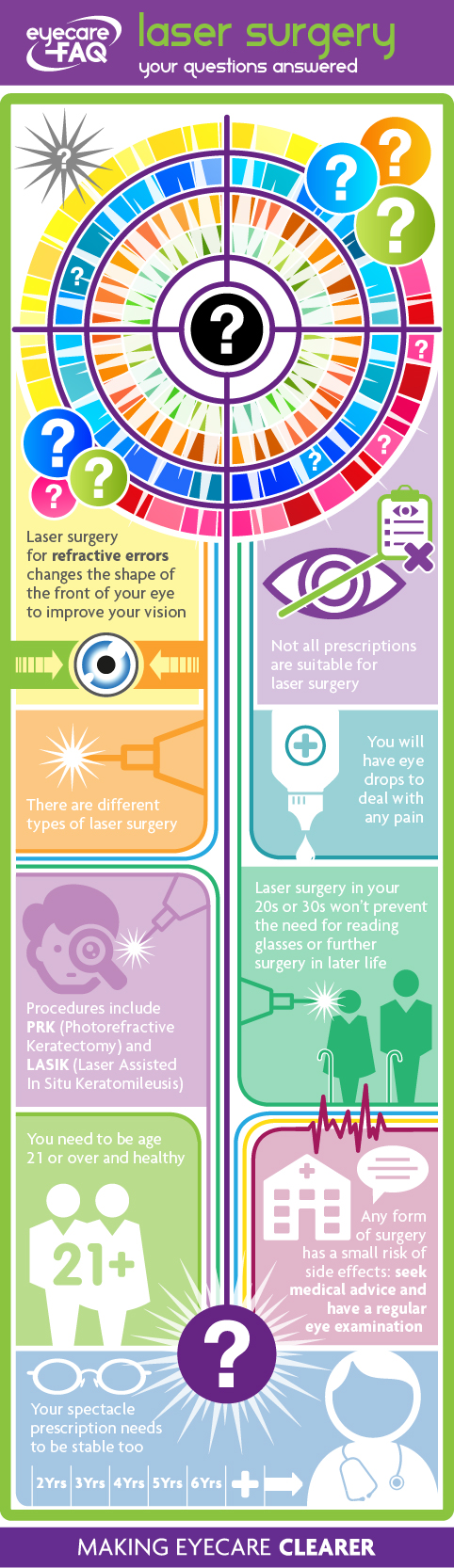
Lasik eye surgical procedure resembles a pair of glasses for the eyes; it adjusts view to help individuals see more plainly. It's a procedure that improves the cornea, allowing light to enter the eye and be focused properly on the retina. This implies that rather than requiring corrective lenses, people can have twenty-twenty without them.
The procedure is reasonably fast as well as painless; it generally takes around 10 mins per eye with very little discomfort. Furthermore, although there are some risks related to the surgical treatment, lots of people who obtain Lasik report very little or no negative effects. If you have astigmatism or presbyopia, you may still be able to obtain Lasik surgery relying on your individual circumstance. Your medical professional will be able to suggest the most effective course of action based on your case history and present problem.
Treating Astigmatism With Lasik
Though Lasik eye surgery is usually viewed as a quick solution to poor vision, lots of people wonder whether it can treat astigmatism or presbyopia. The good news is, the answer is indeed! Lasik can be used to deal with astigmatism and provides a number of potential advantages:
Initially, it is very important to recognize that Lasik can be utilized to deal with both light and extreme cases of astigmatism. As such, even if you have an extreme degree of astigmatism, you may still be a great prospect for this procedure. In addition, it can give long-term relief from blurred vision as a result of astigmatism.
Furthermore, compared to wearing glasses or get in touches with, Lasik is typically much more comfortable and cheaper in the long run. It also has a much shorter recuperation time than other vision adjustment strategies. Ultimately, Lasik typically causes enhanced eyesight overall-- not simply minimized astigmatism.
Here are 5 manner ins which Lasik can improve your lifestyle after treatment:
1) You'll no longer need glasses or contact lenses for nearsightedness or farsightedness related to astigmatism;
2) Your capability to drive at evening will certainly be enhanced;
3) You'll experience much less eye pressure while analysis;
4) You'll have better clearness when taking a look at items both far and wide; and
5) You'll enjoy improved general convenience in day-to-day tasks like sporting activities and also hobbies.
Lasik is an exceptionally reliable means of correcting astigmatism as well as can greatly enhance your vision-- and your lifestyle-- in the process. If you suffer from astigmatism or presbyopia as well as are taking into consideration vision improvement surgical treatment, speak to your medical professional concerning whether Lasik may be right for you.
Dealing With Presbyopia With Lasik
When it pertains to Lasik eye surgery and dealing with presbyopia, the procedure is slightly various compared to that of astigmatism. Presbyopia is a condition that typically affects those over 40 years of ages, and it triggers difficulty with close to vision due to a weakening of the eye's concentrating muscular tissues. https://www.health.harvard.edu/blog/small-incision-lenticule-extraction-smile-its-whats-new-in-laser-vision-correction-2020051419765 for presbyopia includes creating 2 separate laser treatments - one for range vision and also one for close to vision. This can give individuals with boosted view in both far and near ranges.
The recuperation process from Lasik surgical treatment for presbyopia is similar to that of regular Lasik procedures, suggesting individuals ought to anticipate some dryness and irritability in their eyes, as well as obscured vision as they recover. It is necessary to keep in mind that because this kind of Lasik surgical procedure does involve 2 separate treatments, individuals might need to wait as much as three months before fully experiencing the advantages. Nevertheless, as soon as recovered, most individuals who have gone through the procedure record improved vision at both far and near distances.
Final thought
To conclude, LASIK eye surgery is a feasible as well as effective alternative for those with astigmatism or presbyopia who wish to minimize their reliance on corrective lenses. While both conditions can be treated with LASIK, the individual's age as well as level of prescription need to be taken into account when figuring out if the treatment will be successful. Individuals need to speak with an eye doctor to guarantee they are great prospects for LASIK prior to going through the treatment.
For those with astigmatism, LASIK can generate exceptionally precise results that dramatically improve vision, commonly getting rid of the requirement for glasses or contacts entirely. For Lasik For Farsightedness experiencing presbyopia, LASIK can help reduce the results old on vision and supply sharper vision in all lighting conditions.
Ultimately, LASIK eye surgery is a powerful device for correcting vision problems such as astigmatism and presbyopia. With proper assessment as well as evaluation, individuals can benefit from boosted vision without depending exclusively on corrective lenses. By considering their private needs, people can weigh the pros and cons of this treatment and also make an educated choice about whether it's right for them.